
Albert
Hames
The life of Albert Hames
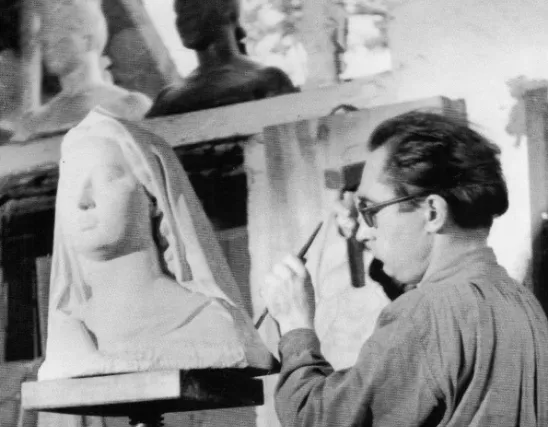
Albert Hames (1910-1989) grew up in a middle-class family in Rumelange, a village deeply shaped by the steel industry.
As early as 1924, Albert Hames began studying sculpture at the École professionnelle d’Esch-sur-Alzette. He complemented his training with a carpentry apprenticeship with Michel Hammerel in 1929 and attended evening classes in sculpture and drawing in Luxembourg-Ville that same year. Between 1930 and 1931, he refined his skills under the Luxembourgish sculptor Albert Kratzenberg.
He then developed his woodcarving skills at the Staatliche Berufsfachschule für Holzschnitzerei in Oberammergau in 1934, before joining the Académie des Beaux-Arts de Munich in 1936.
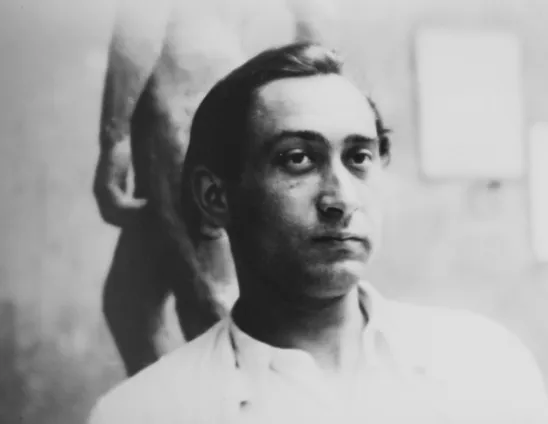
The following year, he specialised in restoration at the Landesamt für Denkmalpflege, also in Munich, then continued his studies at the École supérieure des Beaux-Arts de Paris in 1938. Returning to Luxembourg in 1939, he began his career as an art restorer, then returned to Munich between 1942 and 1943 to complete his restoration training. Albert Hames was the first Luxembourgish sculptor to pursue specialised university training in the conservation and restoration of artworks.
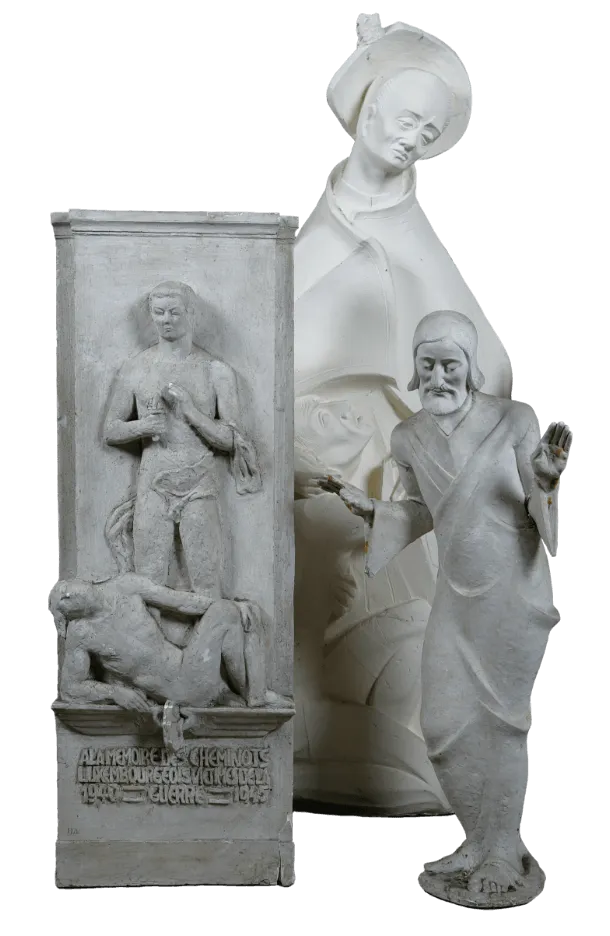
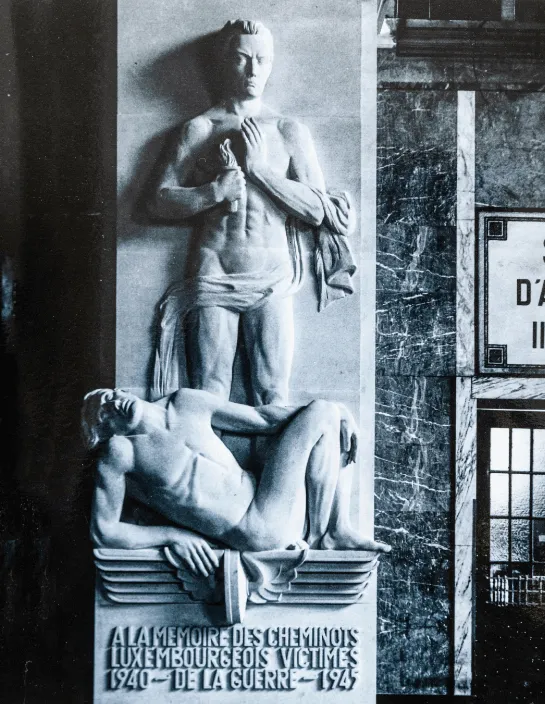
After the Second World War, he taught at the École professionnelle de l’État in Esch-sur-Alzette and restored Gothic and Baroque sculptures as well as damaged paintings. His work, primarily commissioned by public and religious institutions, led him to create numerous sculptures for churches and public spaces from 1951 onwards. His works in stone, metal and wood are characterised by clean lines and restrained forms. They can be seen in several churches and municipalities across Luxembourg and at the Musée national d’archéologie, d’histoire et d’art. His major works include the war memorial at the Gare de Luxembourg-Ville and bas-reliefs in the basilica in Echternach and the cathédrale Notre-Dame de Luxembourg.
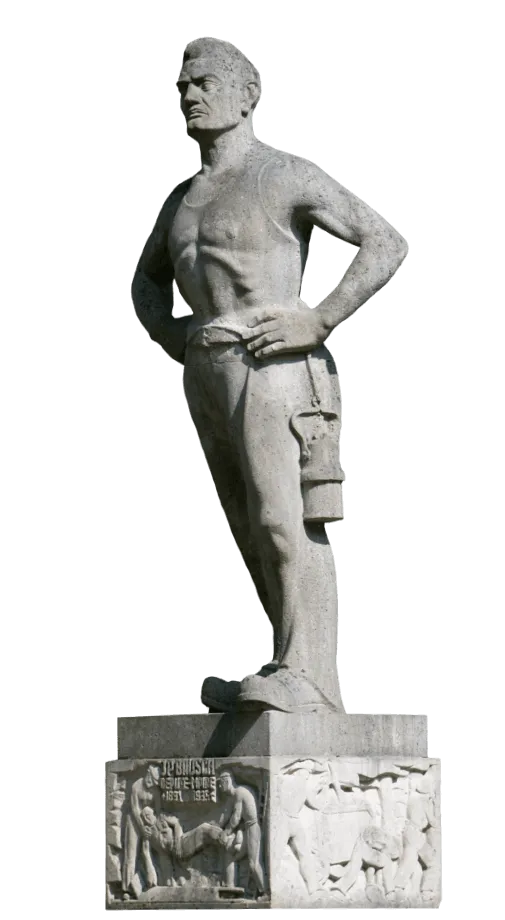
In Rumelange, visitors can admire his sculpture of Jean-Pierre Bausch as well as various bas-reliefs on public buildings such as the primary school and town hall.
In Albert Hames, sculpteur, published in 2008, French art critic Patrick-Gilles Persin wrote : « Some of his works have long been etched into the national memory, as well as that of almost every Luxembourger who passes one or another of them every day. »